定义
归并排序(Merge Sort)是一种 分治 比较排序算法:将序列分成两半分别排序后,合并 两个有序子序列。最好、最坏与平均时间复杂度均为 ,是 稳定 排序。
与快排相比,归并排序的时间复杂度 稳定 为 ,不依赖输入分布;代价是数组实现通常需要 辅助缓冲区。在链表上通过改指针完成合并,无需额外数组,是对链表做通用排序的推荐方式。
特性:平均 · 最好 · 最坏 · 空间 · 非原地 · 稳定
过程
工作原理:分治三步——切分、递归排序、合并。
- 切分:从中间将序列分为左右两半。
- 排序:分别对左右子序列排序,直至每段只剩一个元素(天然有序)。
- 合并:左右两段均已有序,从各自开头依次比较,取较小者放入结果;相等时先取左侧,保证稳定。
- 结束:层层向上合并,最终得到有序序列。
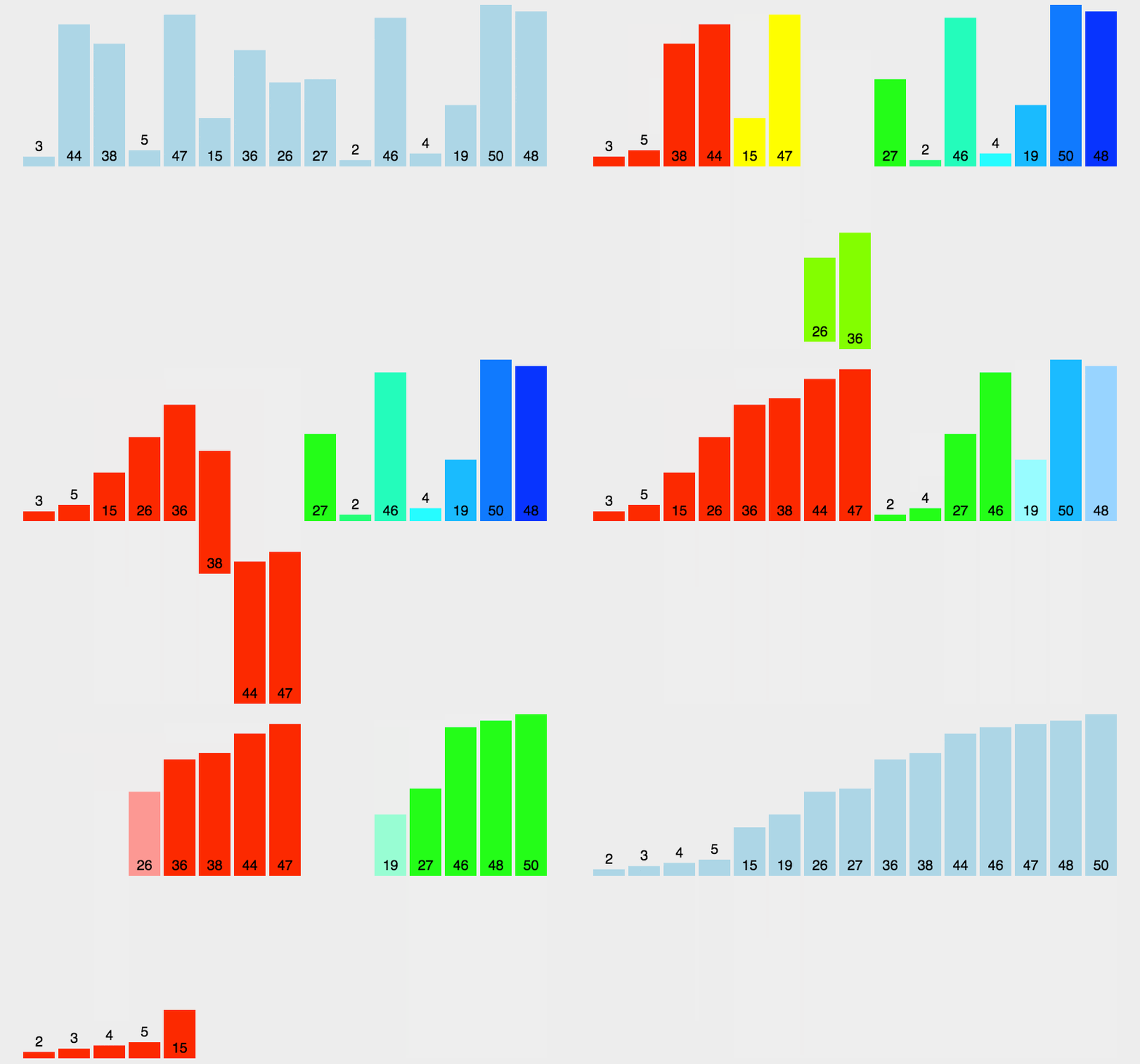
动图对全部 15 个元素执行相同流程。取前 5 个 [3, 44, 38, 5, 47] 示意切分与合并:
        [3, 44, 38, 5, 47]
       /                 \
   [3, 44, 38]           [5, 47]
   /      \               /    \
[3, 44]   [38]        [5]      [47]
 /  \
[3] [44]
性质
稳定性
归并排序是 稳定 排序算法。合并时若左右两段当前元素相等,先取左侧,相等键的相对顺序保持不变。
时间复杂度
| 情况 | 复杂度 | 说明 |
|---|---|---|
| 最好 | 始终分治合并,与输入分布无关 | |
| 最坏 | 同上 | |
| 平均 | 同上 |
空间复杂度
| 实现 | 复杂度 | 说明 |
|---|---|---|
| 数组 | 合并阶段需要辅助缓冲区 | |
| 链表 | 递归栈;合并通过改指针,无需额外数组 |
代码实现
基础写法(数组 · 递归 · 自顶向下)(源码)
以 mid 切分后递归排序再合并:
static void merge_sort_recur(int *src, int *dst, int len) {
    if (len <= 1) return;

    int s1 = 0, e1 = len / 2;
    int s2 = e1, e2 = len;

    merge_sort_recur(src + s1, dst + s1, e1 - s1);
    merge_sort_recur(src + s2, dst + s2, e2 - s2);

    int index = 0;
    while (s1 < e1 && s2 < e2) {
        dst[index++] = src[s1] <= src[s2] ? src[s1++] : src[s2++];
    }
    while (s1 < e1) dst[index++] = src[s1++];
    while (s2 < e2) dst[index++] = src[s2++];

    for (int i = 0; i < len; i++) {
        src[i] = dst[i];
    }
}
优化写法(数组 · 自底向上)(源码)
段长从 1 倍增逐轮两两合并,纯循环实现,避免递归栈开销:
for (int seg = 1; seg < len; seg <<= 1) {
    for (int start = 0; start < len; start += 2 * seg) {
        int s1 = start, e1 = min(start + seg, len);
        int s2 = e1,   e2 = min(start + 2 * seg, len);
        int index = start;

        while (s1 < e1 && s2 < e2) {
            dst[index++] = src[s1] <= src[s2] ? src[s1++] : src[s2++];
        }
        while (s1 < e1) dst[index++] = src[s1++];
        while (s2 < e2) dst[index++] = src[s2++];
    }

    // 交换 src / dst
}

if (src != arr) {
    for (int i = 0; i < len; i++) {
        arr[i] = src[i];
    }
}链表实现(源码)
快慢指针切分,递归排序后按值拼接,无需 辅助数组:
static Node *merge(Node *left, Node *right) {
    Node dummy = {0, NULL};
    Node *tail = &dummy;

    while (left && right) {
        if (left->data <= right->data) {
            tail->next = left;
            left = left->next;
        } else {
            tail->next = right;
            right = right->next;
        }
        tail = tail->next;
    }
    tail->next = left ? left : right;
    return dummy.next;
}

Node *merge_sort(Node *head) {
    if (!head || !head->next) return head;

    Node *second = split(head);
    head = merge_sort(head);
    second = merge_sort(second);
    return merge(head, second);
}
参考阅读
- OI Wiki - 归并排序 (2026-06-10)
- 菜鸟教程 - 归并排序 (2026-06-09)
- 链表的归并排序
- 插入排序 & 归并排序(视频)
- 归并排序(视频)
- Merge sort in 3 minutes (video)
- 使用外部数组(C 语言)
- 使用外部数组(Python 语言)
- 对原数组直接排序(C++)